SAFE PATIENT HANDLING · PATENT PENDING
Lift less.
Move more.
The Elevon Patient Mobility Board is a strap-assisted repositioning device that lets as few as one nurse or therapist bring a patient from lying down to sitting at the edge of the bed. It uses mechanical leverage instead of muscle, so every transfer takes fewer hands than it does today.
- 89/100
- usability score from clinician testing
- −32%
- perceived effort during repositioning
- 9 of 11
- clinicians prefer it to their current method
THE PROBLEM WE SOLVE
Moving patients is breaking the people who care for them
Every day, nurses and therapists reposition dependent patients by hand: sitting them up, turning them, moving them to the edge of the bed. It takes multiple staff, wastes clinical time, and injures more caregivers than any other task in the hospital.
48%
of hospital workplace injuries stem from patient handling
54%
of injury-related lost workdays come from sprains & strains
560K+
more injuries in healthcare than any other major industry, every year
01
Manual lifting
Still the default. High injury risk, multiple staff per move, and careers cut short by cumulative strain.
Doesn’t solve the transfer
02
Powered lifts
Safe but impractical for routine repositioning. Bulky, slow to deploy, and too expensive to put at every bedside.
Doesn’t solve the transfer
03
Slide sheets & boards
Lateral transfers only. No help for multi-stage repositioning, and caregivers still do the heavy work.
Doesn’t solve the transfer
Sources: OSHA, BLS, NIOSH, NSI Nursing Solutions, and case study analysis.
THE PRODUCT · PATIENT MOBILITY BOARD
One board. The leverage of a full team.
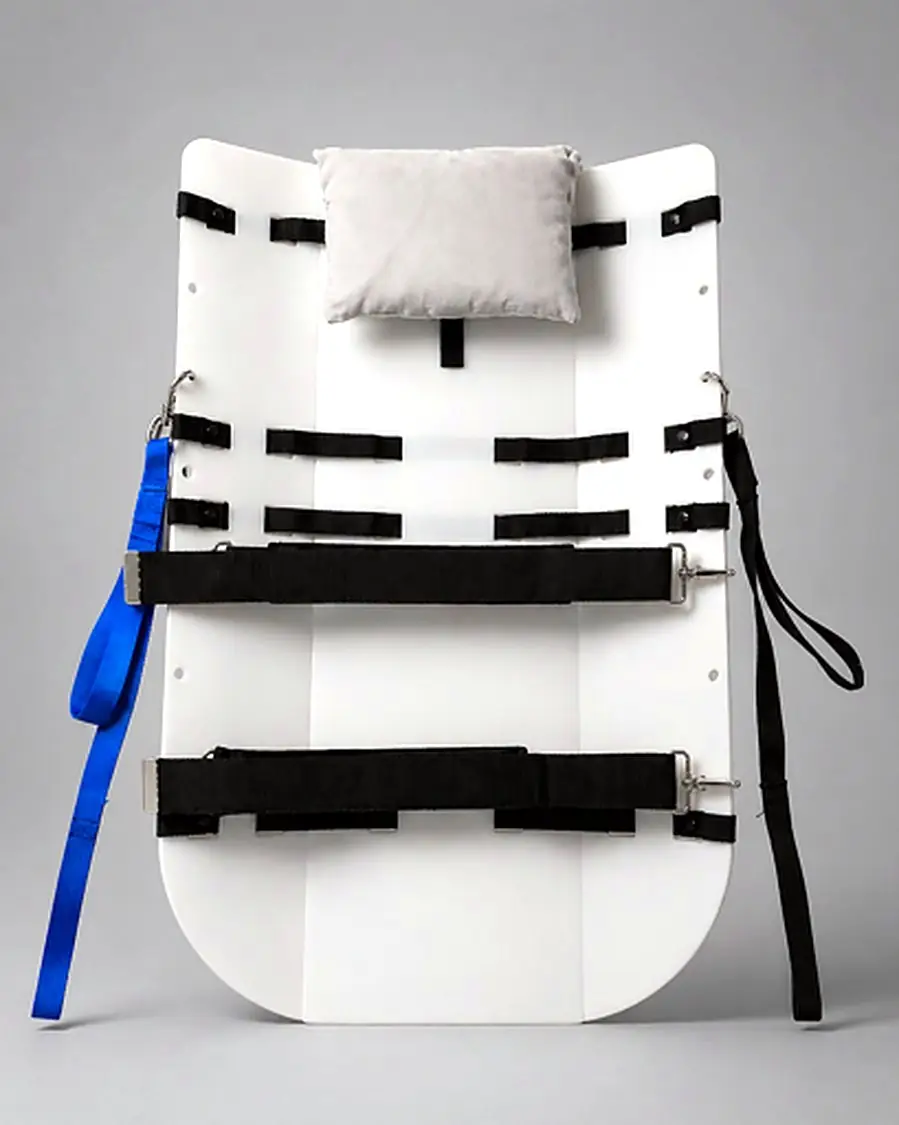
A rigid backboard, two securing straps, and two lifting straps, engineered so fewer caregivers can reposition a dependent patient safely.
Mechanical leverage
Caregiver effort becomes controlled rotation, taking a patient from supine to seated with a fraction of the strain.
Fewer caregivers
Whatever a move takes today, the board cuts the hands required. Many transfers become one-person.
Zero power required
No motors, hoists, ceiling tracks, or charging. Deploys at the bedside in seconds.
Controlled, safe motion
Predictable, gradual movement protects lines, tubes, patients, and caregivers.
Engineered around the transfer
Chest & abdomen straps
Two padded securing straps anchor the torso to the board so the trunk moves as one supported unit.
Roll & lift straps
Two strap assemblies with grip loops. Roll the patient toward you, then assist to upright with control.
Soft head pillow
An integrated cushion supports the head and neck throughout the transfer.
Contoured rigid backboard
A slim, low-profile platform wedges behind the patient and creates a stable moving surface.
IN DEVELOPMENT
ICU line & tubing attachments
Clip-on organizers keep lines, drains, and vent tubing orderly through ICU transfers.
Head-support strap
Added head support for patients with limited head and neck control.
THE WORKFLOW
Supine to seated in 9 controlled steps
Photographed during our clinician evaluation in Michigan, where a single caregiver ran the full sequence.
 01
01Bend knees to 90°
Position the patient supine with knees bent.
 02
02Place & wedge board
Roll the patient and wedge the board behind the trunk.
 03
03Secure abdomen strap
Fasten the abdomen strap across the patient.
 04
04Secure chest strap
Fasten the chest strap. The trunk now moves as one supported unit.
 05
05Attach far strap
Clip the far-side lifting strap to the board.
 06
06Attach near strap
Clip the near-side lifting strap to the board.
 07
07Roll towards you
Use the loops to roll the patient toward you with leverage, not lifting.
 08
08Assist to upright
Guide the patient up to sitting in one controlled arc.
 09
09Stabilize & settle
Patient seated at the edge of the bed, supported and ready to mobilize.
WHERE IT FITS
Built for every setting where patients need a hand up
Clinician feedback showed the strongest fit in high-effort populations: bariatric patients, ICU patients with lines, and dependent or weak patients.
ICU & acute care
Early mobility for dependent patients with lines and tubes, using fewer staff per repositioning event.
LTACH & skilled nursing
Daily repositioning and edge-of-bed sitting for long-stay residents, without pulling a second caregiver from the floor.
Rehab & therapy teams
Controlled, progressive supine-to-seated work so therapy time goes into treatment, not manual lifting.
Home care
A safe way for family caregivers and home health staff to reposition loved ones without injury.
CLINICAL EVALUATION · MICHIGAN
Tested by the people who do this every shift
11 practicing clinicians, including physical therapists, occupational therapists, and nurses, ran real repositioning workflows with the board in a clinical environment.
−32%
Perceived effort
Borg RPE fell from 11.8 to 8.1 (6-20 scale)
−87%
Musculoskeletal discomfort
Clinicians rated discomfort 0-10 by body region. Average ratings fell from 5.5 to 0.7
+51%
Workflow smoothness
Clinician-rated improvement vs. current technique
89/100
System Usability Scale score, in the 'excellent' range
9 of 11
clinicians preferred the board over their current method
8.7/10
perceived safety experienced as the patient
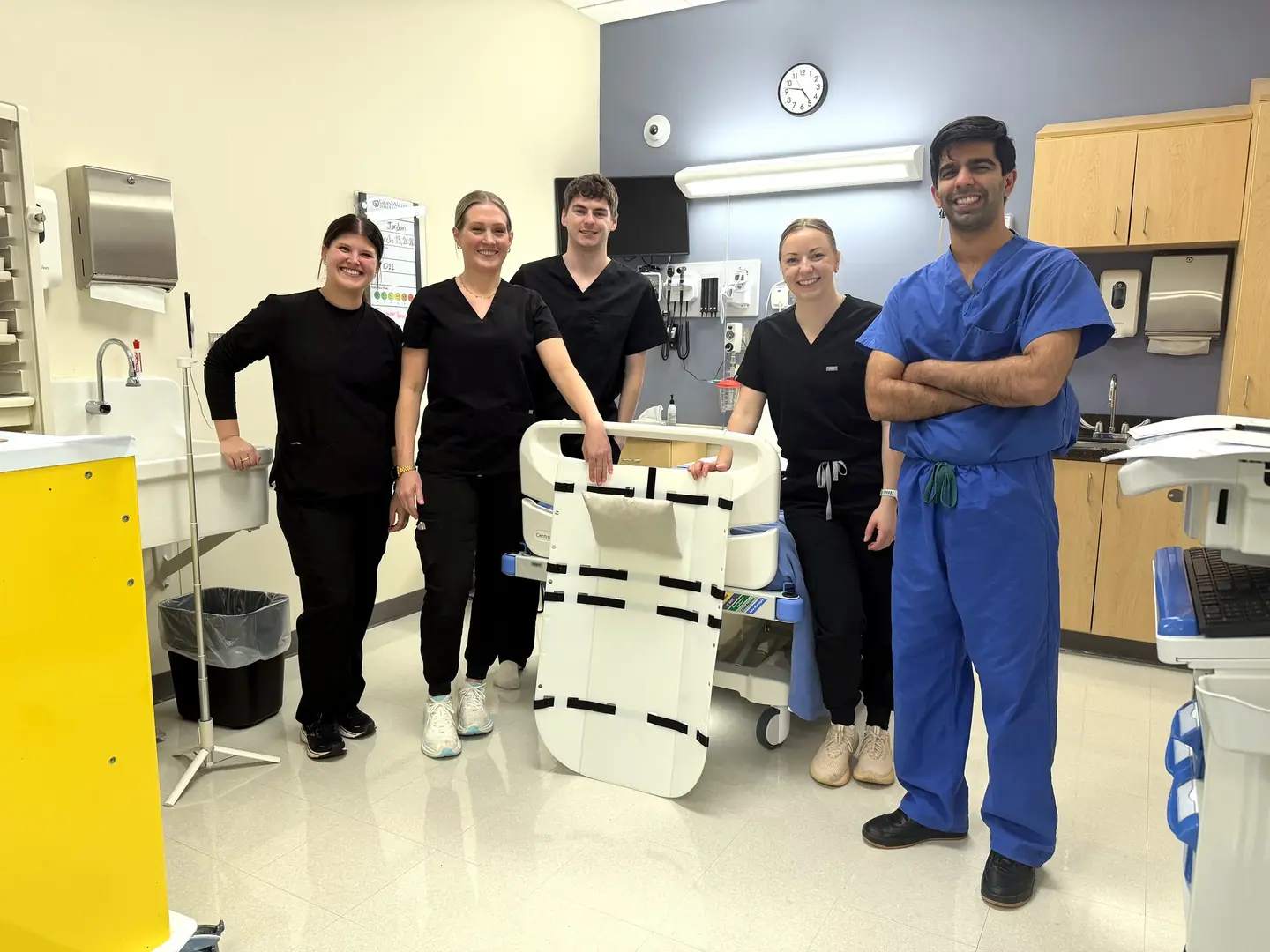
The clinical evaluation team
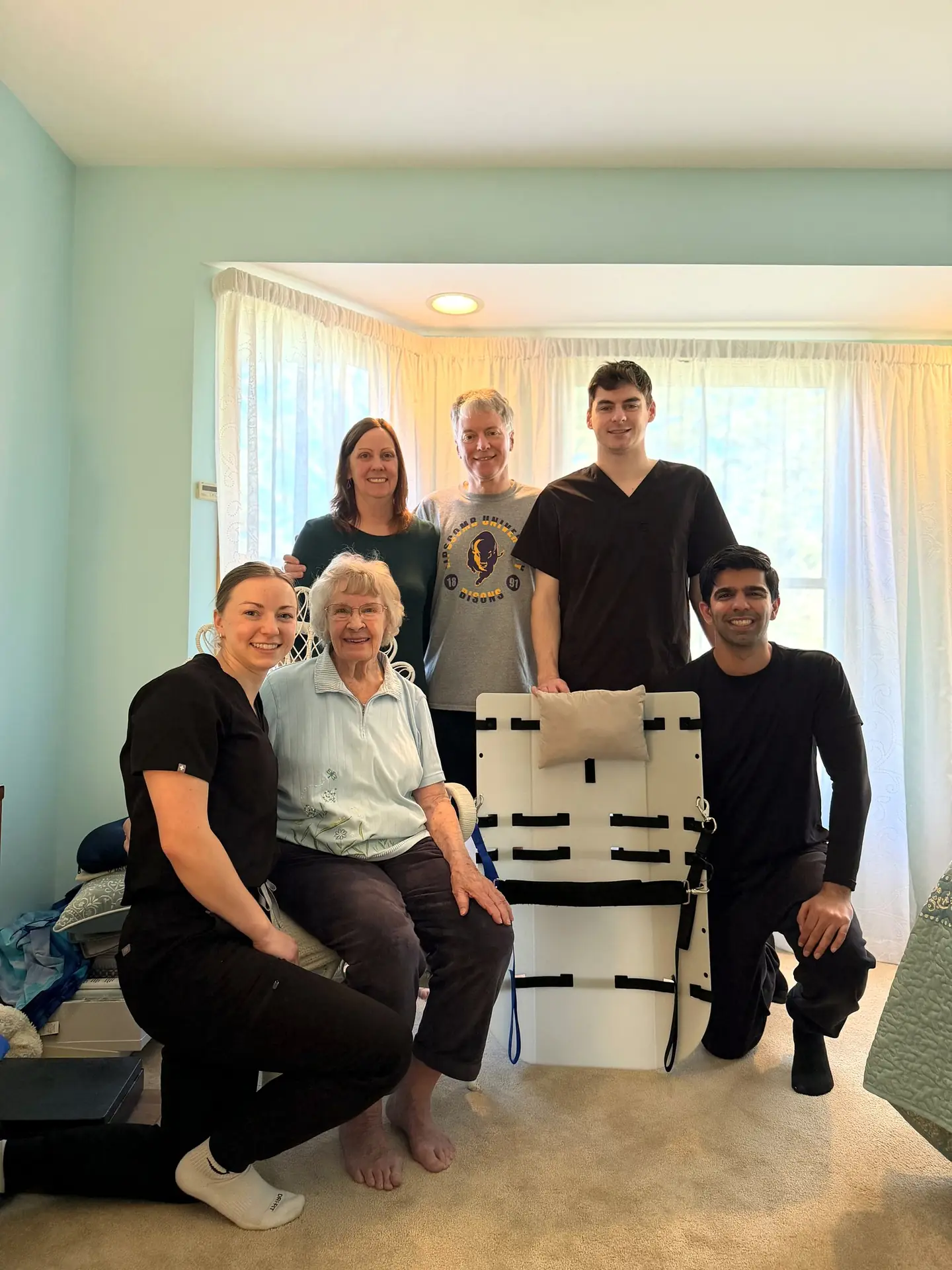
In-home evaluation with caregivers
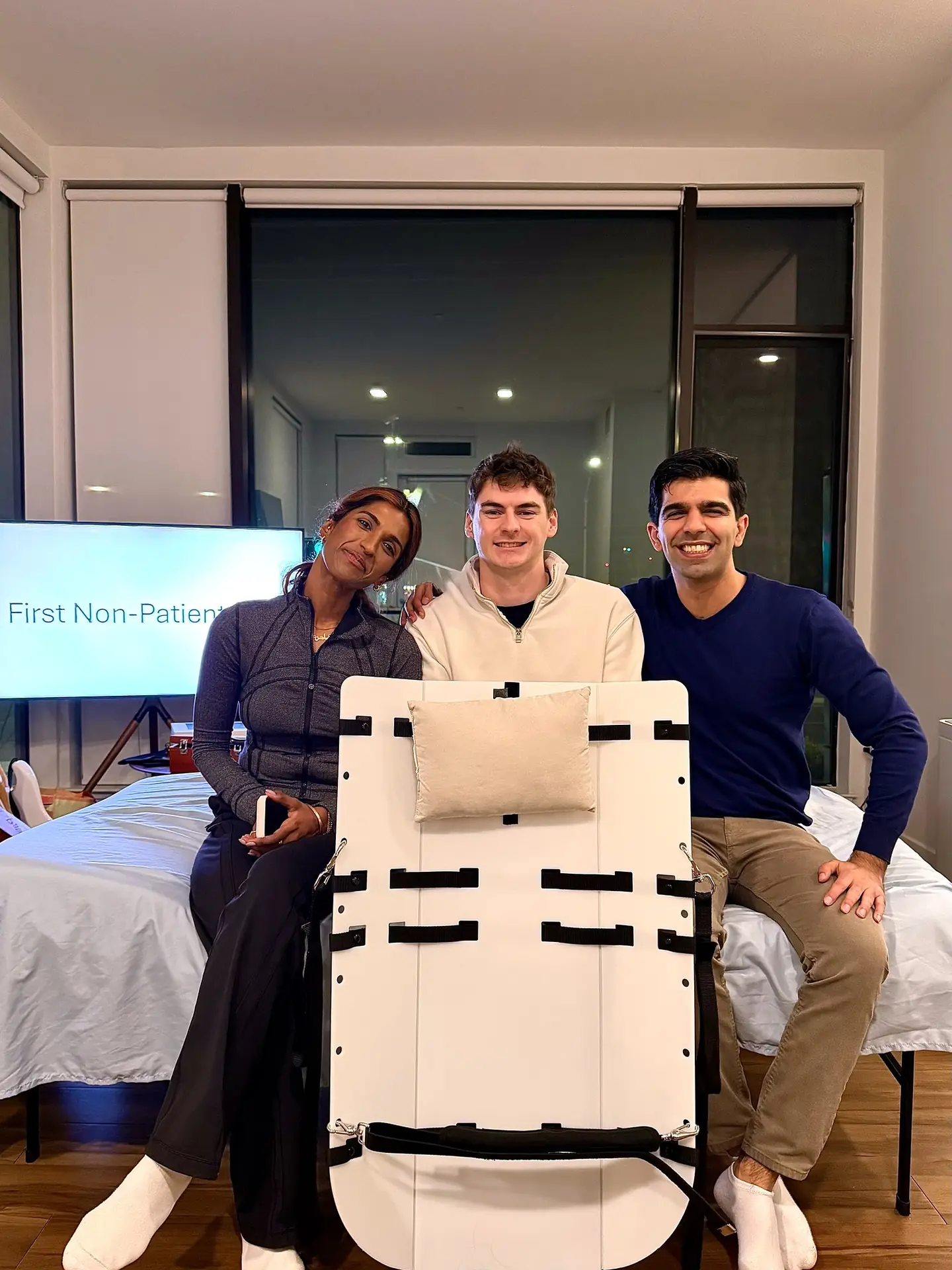
First non-patient trial
“Easy to use and significantly improved transfer experience.
“This device will be such an asset!
“The big advantage is the need for less people to mobilize a patient.
“Feels safer. I don't have to rely on a tech.
“Much safer. Our current method takes two people.
“A lot less effort than manual techniques.
“Easy to use and significantly improved transfer experience.
“This device will be such an asset!
“The big advantage is the need for less people to mobilize a patient.
“Feels safer. I don't have to rely on a tech.
“Much safer. Our current method takes two people.
“A lot less effort than manual techniques.
Results from a structured usability evaluation with 11 healthcare professionals (non-patient simulation). Data on file at Elevon Medical. The Patient Mobility Board is an investigational prototype and is not currently available for commercial sale.
THE TEAM
Built at the bedside, not in a boardroom
Elevon Medical pairs an ICU physical therapist who lives this problem every shift with medical device researchers and engineers who know how to build for it.
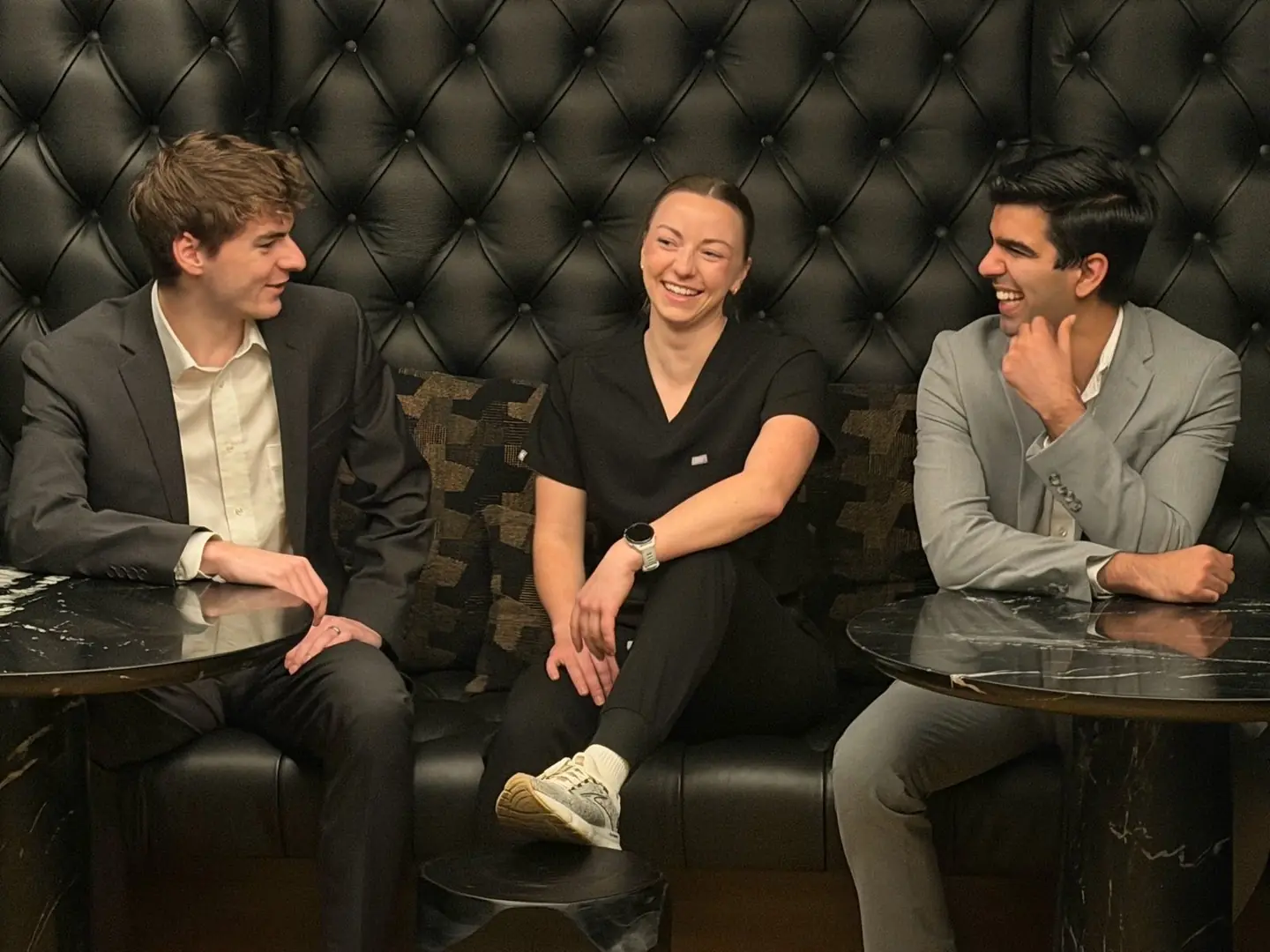
Kelsey Florian, PT, DPT
CLINICAL LEAD
ICU Physical Therapist at Corewell Health; acute care residency training at Johns Hopkins & University of Delaware.
Joshua Badshah
RESEARCH & DESIGN
Stanford-based Biodesign and medical device research spanning academia and BioTech.
Jordan Florian
ENGINEERING & PRODUCT
BioTech and MedTech device development, prototyping, and R&D at a successfully exited medical technology company.
WHERE WE ARE
Two phases down. Pilots next.
PHASE 1COMPLETE
Problem validation
Clinician interviews across PTs, RNs, and ICU staff surfaced a clear unmet need in high-strain mobility workflows.
PHASE 2COMPLETE
Prototype & usability
Functional prototype evaluated hands-on with 11 clinical users in Michigan, with strong results on effort and usability.
PHASE 3WE ARE HERE
Patient pilot studies
Multi-site clinical evaluation focused on safety, usability, and workflow integration to support hospital adoption.
PHASE 4
Early commercial
Hospital partnerships and pilot deployments, starting in high-need units like the ICU and LTACH.
GET INVOLVED
Help us make patient handling safe by default
HEALTHCARE PROVIDERS
Trial the board on your unit
We’re recruiting hospitals, LTACHs, skilled nursing facilities, and rehab teams for our upcoming pilot studies. Hands-on evaluation with your own staff, on your own unit.
Request a Trial →INVESTORS
Back the next standard of care
A clinician-validated prototype, a pending patent, and a costly problem in every hospital. Pilots are next. Reach out for the full story.
Contact the Team →Or email us directly at contact@elevonmedical.com